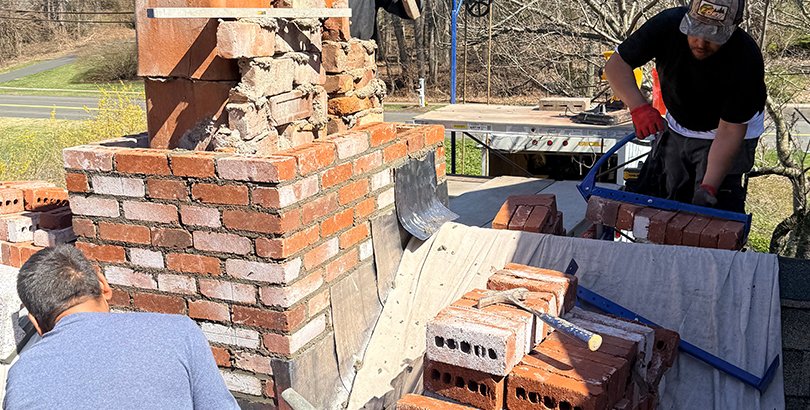
Quick answer: The seven signs: smoke coming into the room, unusual odors, water in the firebox or stains near the chimney, crumbling mortar or flaking bricks, white staining on the masonry, rust or fallen material, and a leaning chimney or large cracks. Any one of these means your chimney should be checked by a professional. A warning sign tells you something needs a look. Only an inspection tells you what is wrong and how serious it is.
Key takeaways
- Chimney problems usually start small and get worse.
- One symptom can have several causes. An inspection finds the real one.
- Some situations are emergencies. Others can wait for a scheduled visit.
- Carbon monoxide has no smell, so a working CO alarm is essential.
Most chimney problems do not show up all at once. A little smoke drifts into the room. A stain appears on the ceiling. A few crumbs of mortar land on the roof shingles. They are easy to ignore, and that is exactly when they get expensive.
A warning sign is a reason to get your chimney checked. It is not a diagnosis.
Quick guide: how urgent is each sign?
| Warning sign | What it might mean | How urgent | Next step |
|---|---|---|---|
| Smoke coming into the room | Draft problem, blockage or damper issue | Stop using fireplace | Book now |
| Persistent or unusual odors | Buildup, moisture or an animal in the chimney | Book soon | Book |
| Water in the firebox or stains nearby | A leak in the cap, crown, flashing or masonry | Book soon | Book |
| Crumbling mortar or flaking bricks | Water damage and weathering | Book soon | Book |
| White staining on the masonry | Water moving through the brick | Book soon | Book |
| Rust, fallen material or damaged parts | Moisture or deterioration inside the chimney | Stop using fireplace | Book now |
| Leaning chimney or large cracks | Possible structural problem | Stop using fireplace | Book now |
Emergencies are different. If you suspect a chimney fire or your carbon monoxide alarm goes off, go to the emergency section below.
Sign 1: Smoke coming into the room
Smoke should go up the chimney, not into your living room. When it comes back in, something is interfering with the chimney’s draft, which is its ability to pull smoke out.
Possible causes:
- A damper that is closed, partly closed or damaged
- A blockage such as a nest, debris or heavy buildup
- Air pressure problems inside the home
- A chimney that is the wrong size for the fireplace
Lighting fire after fire to see if it fixes itself will not tell you the cause. It just fills your home with smoke. Stop using the fireplace and have it checked. Learn more: Why is my fireplace smoking into the house?.
Smoke in the room? Don’t light another fire. Call (860) 854-1894 or book an inspection. We will find out whether it is the damper, a blockage or the draft.
Sign 2: Persistent or unusual odors
Some smell around a fireplace is normal. A strong or lasting odor is not.
- A strong smoky or tar-like smell, especially in warm or humid weather, may point to creosote buildup.
- A musty or damp smell may point to water getting in.
- A rotten or foul smell may mean an animal is nesting or has died in the chimney.
Smell alone cannot tell you what is wrong. A professional can find the source.
Important: carbon monoxide has no smell, color or taste. Only a working CO alarm can warn you.
Sign 3: Water in the firebox or stains near the chimney
Water in the fireplace, or stains on the ceiling or walls near the chimney, mean water is getting in somewhere. Common entry points:
- A missing or damaged chimney cap
- A cracked crown (the top surface of the chimney)
- Damaged flashing where the chimney meets the roof
- Cracked brick or mortar
Painting over a ceiling stain hides the problem, but the water keeps coming until the source is fixed. Over time it damages brick, mortar, metal parts and the wood framing around the chimney. Learn more: Chimney leaks and why to fix them before winter.
Found a stain or water in the firebox? Leaks get worse every time it rains. Book an inspection and we will find where the water is getting in. Book a leak inspection or call (860) 854-1894.
Sign 4: Crumbling mortar or flaking bricks
Look at the chimney from the ground. Gaps where mortar used to be? Bricks with chipped, flaking or broken faces?
When water soaks into brick and freezes, it expands and pushes the surface off in flakes or chunks. This is called spalling. Mortar between the bricks also wears away over time.
Some damage is minor and fixed in one spot. Other damage is spread across the whole chimney and needs bigger repairs. A professional can tell which. Learn more about our chimney repair services.
Sign 5: White staining on the masonry
A white, powdery or chalky stain on the bricks is called efflorescence. It forms when water moves through the masonry and carries natural salts to the surface. When the water dries, the salts stay.
On its own, it does not mean the chimney is falling apart. But it tells you water is moving through the brick, and water is the main cause of chimney damage. It is worth finding out where it comes from.
Sign 6: Rust, fallen material or visible damage
Look inside the firebox and at the parts you can see. Warning signs:
- Rust on the damper or other metal parts, which usually means moisture is getting in
- Pieces of tile, brick or mortar in the firebox, which may have fallen from inside the chimney
- A missing, bent or damaged cap, viewed safely from the ground
Flue tile pieces in the fireplace matter most. Flue tiles line many masonry chimneys and help protect your home from heat and smoke. Have damaged tiles checked before you use the fireplace again.
Pieces in the firebox? Stop using the fireplace. Fallen tile or brick needs a professional look before the next fire. Book an inspection or call (860) 854-1894.
Sign 7: A leaning chimney or large cracks
A chimney that tilts, pulls away from the house or has large cracks needs a prompt professional assessment. These can be signs of a structural problem.
Do not try to fix structural damage yourself, and do not climb onto the roof. Stop using the fireplace and keep people away from the area below the chimney until it has been checked.
Which signs need action, and how fast?
Call 911 right away if:
- You suspect a chimney fire: a loud roaring or rumbling sound, heavy smoke, a strong hot smell, or flames or sparks from the top of the chimney. Get everyone out first, then call.
- Your carbon monoxide alarm goes off, or anyone feels dizzy, sick, confused or has a headache. Get everyone outside into fresh air, then call 911 or the fire department. Do not go back in until responders say it is safe.
Stop using the fireplace and book an inspection now if you see:
- Smoke coming into the room
- Fallen flue tile or masonry
- A leaning chimney or large cracks
Book an inspection soon if you see:
- Water stains or white staining
- Crumbling mortar or flaking bricks
- Rust or unusual odors
Not sure how serious it is? Tell us what you are seeing. We will tell you whether it can wait. Book an inspection or call (860) 854-1894.
How a professional finds the cause
One symptom can have several causes. Water in the firebox might come from the cap, the crown, the flashing or the brick. Smoke in the room might come from a blockage, the damper or air pressure in the house.
An inspection looks at the whole system to find the real cause. It usually includes:
- Checking the accessible parts of the chimney, inside and out
- Documenting what is found, often with photos
- Recommending further investigation, such as a camera inspection, when needed
That way you fix the actual problem instead of guessing.
Frequently asked questions
Does a chimney that looks fine still need inspection?
Yes. Many problems sit inside the flue or on top of the chimney where you cannot see them. Annual inspection is recommended even when everything looks normal. Book yours.
Are all cracks equally serious?
No. A small surface crack is very different from a deep crack in the structure or flue. A professional can tell you how serious it is and what, if anything, to do. Ask us about yours.
Does white staining mean I need a rebuild?
Not usually. It shows water is moving through the masonry. The fix depends on where the water comes from and whether it caused damage. Many cases need simple repairs, not a rebuild. Get it checked.
Can cleaning fix every warning sign?
No. Cleaning removes buildup and blockages. It does not fix cracks, leaks, damaged parts or structural problems. An inspection tells you whether you need cleaning, repair or both. Book an inspection.