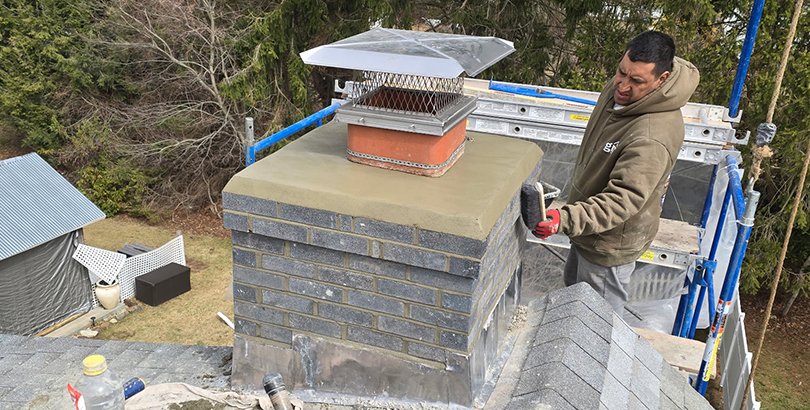
Quick answer: The cap is the metal cover on top of the flue that keeps out rain and animals. The crown is the concrete or mortar slab that seals the top of a masonry chimney. The flue is the passage that carries smoke and gases out. The liner is the protective layer inside the flue. The damper opens and closes to control airflow. Knowing these makes an inspection report or repair estimate much easier to understand.
Key takeaways
- Each part of a chimney does a different job.
- Not every chimney has the same parts. Masonry and factory-built chimneys differ.
- The cap and crown are often confused, as are the flue and liner.
- A damaged part does not automatically mean the whole chimney needs replacing.
Your chimney inspection report says the crown is cracked, the cap is rusted and the liner may need attention. You nod along, but you are not sure what any of those are. You are not alone. Some chimney terms sound almost identical.
This guide explains the main parts in plain language so you can understand what your technician is telling you and ask good questions. It covers a typical masonry (brick or stone) chimney with a wood-burning fireplace. Factory-built chimneys, and chimneys for stoves or furnaces, may have different parts.
Holding a report or estimate you do not understand? We will walk you through every finding in plain language. Book an inspection or call (860) 854-1894.
A quick visual guide to chimney parts
| Part | Where it is | What it does |
|---|---|---|
| Cap | Top of the flue | Keeps out rain, debris and animals |
| Crown | Top of a masonry chimney | Seals the top and sheds water |
| Flue | Inside the chimney | Carries smoke and gases out |
| Liner | Lines the flue | Protects the chimney and home from heat and gases |
| Damper | Above the firebox or at the top | Opens and closes the chimney |
| Firebox | Bottom, inside the home | Where the fire burns |
| Flashing | Where chimney meets roof | Seals the joint against water |
Chimney cap: protection above the flue
Where: on top of the flue opening, at the very top of the chimney.
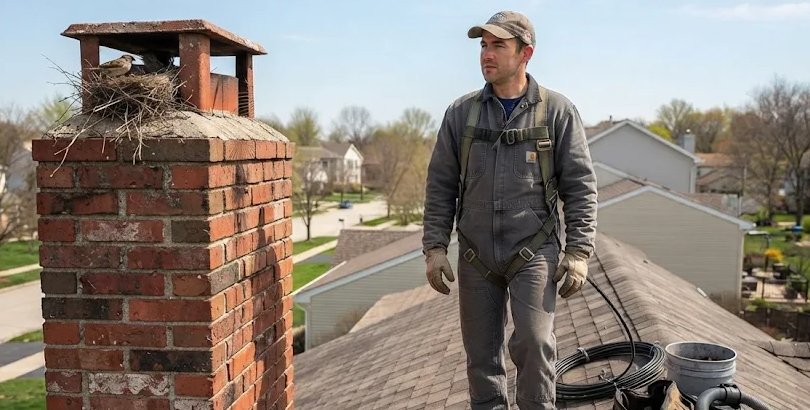
What it does: usually a metal cover with a mesh screen around the sides. It keeps rain and snow from falling straight down the flue, and the mesh keeps out birds, squirrels and other animals. It also helps stop sparks from escaping onto the roof.
Signs of damage: rust, dents, a bent or missing screen, or a cap that is loose or missing.
Not to be confused with: the crown. The cap sits on the flue. The crown is the surface the cap often sits on.
Chimney crown: the top surface of a masonry chimney
Where: covering the top of a brick or stone chimney, around the flue.
What it does: seals the top so water cannot soak into the bricks below. A well-built crown slopes away from the flue so water runs off, and extends past the edges so water drips clear of the brick.
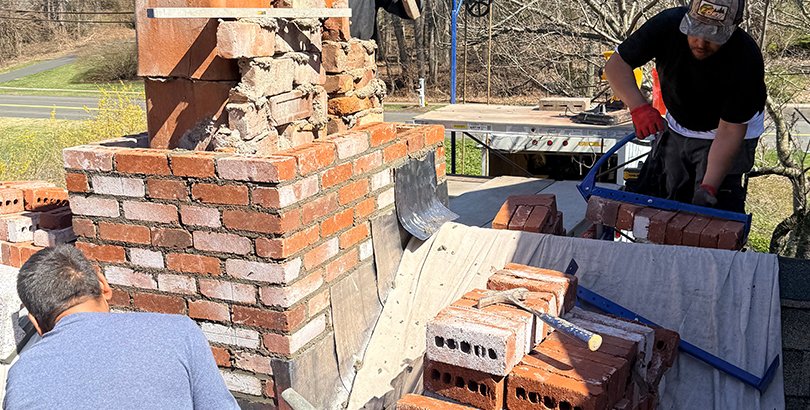
Signs of damage: cracks, chips, crumbling, or a crown that is flat and holds water. Because it faces the weather directly, small cracks can grow quickly, especially in freeze-thaw cycles. Damaged crowns are a common source of leaks. Learn more: Chimney leaking? Causes and repairs.
Chimney flue: the passage for exhaust
Where: the open passage running up the inside of the chimney.
What it does: carries smoke, heat and combustion gases, including carbon monoxide, out of the house.
Good to know: some chimneys have more than one flue, for example one for the fireplace and another for the furnace or water heater. Each appliance usually needs its own flue, and your report may refer to them separately.
Chimney liner: the lining within the flue
Where: lining the inside walls of the flue.
What it does: protects the masonry and the wood framing near it from heat and corrosive gases. It also helps the chimney draft by giving smoke a smooth, correctly sized path.
Common types:
- Clay tile. Square or rectangular tiles stacked inside the chimney. Common in older masonry chimneys.
- Metal. Usually stainless steel. Often used when relining, or for stoves and inserts.
- Cast-in-place. A cement-like material poured or applied inside to form a new liner.
Why the right liner matters: a liner must match the appliance and fuel. One that works for a wood fireplace may not be right for a gas furnace or a wood stove insert. Size matters too. That is why an inspection comes before choosing a new liner. Learn more about our chimney liner services.
Liner flagged on your report? We will check what you have and tell you whether it needs repair, relining or nothing. Book an inspection or call (860) 854-1894.
Damper: the component that controls the opening
Where: most often just above the firebox (a throat damper). Some chimneys have a top-mount damper at the top of the flue, which also acts as a cap.
What it does: opens to let smoke escape while a fire burns, and closes to keep out cold air, rain and animals when the fireplace is not in use.
Good to know: dampers are used differently on different fireplaces and appliances. Follow the operating instructions for your system. A damper that sticks, rusts or will not seal should be checked.
Other terms you may hear
- Firebox: The part of the fireplace where the fire burns, usually lined with firebrick or panels.
- Smoke chamber: The sloped area above the damper that funnels smoke into the flue.
- Smoke shelf: A flat ledge behind the damper that helps stop downdrafts. Debris and creosote can collect here.
- Flashing: Metal strips that seal the joint where the chimney meets the roof.
- Chase: A framed box, often covered in siding, that encloses a factory-built chimney.
- Chase cover: The metal top of a chase. It does the job a crown does on a masonry chimney.
- Mortar joints: The lines of mortar between bricks or stones.
- Repointing (tuckpointing): Removing worn mortar from the joints and replacing it with new mortar.
Three commonly confused comparisons
Cap vs. crown. The cap is the metal cover over the flue opening. The crown is the concrete or mortar surface that seals the top of the masonry. A chimney usually needs both.
Flue vs. liner. The flue is the passage. The liner is the protective layer that lines it. Think of the flue as a hallway and the liner as the walls of that hallway.
Crown vs. chase cover. Both seal the top of a chimney. A crown is used on masonry chimneys. A chase cover is a metal top used on factory-built chimneys enclosed in a chase.
How to read a chimney repair recommendation
When a technician recommends a repair, these questions help you understand it:
1. Which part is affected? Ask them to name the specific component.
2. Can I see it? Ask for photos showing the problem.
3. What is the problem, in plain terms? Ask what is wrong and why it matters.
4. Repair or replace? Ask whether the part can be repaired or needs replacing, and why.
5. How does this fix the problem? Ask how the proposed work relates to the defect they found.
A good technician will be happy to explain. We explain every finding in plain language.
See every finding, explained. Armstrong’s inspections come with an HD video camera scan of the flue and a plain-language explanation of what we find. Book an inspection or call (860) 854-1894.
Frequently asked questions
Does every chimney have the same parts?
No. Masonry chimneys usually have a crown, a clay or metal liner and brick or stone walls. Factory-built chimneys have a chase and chase cover instead of a crown, and a metal flue system. Chimneys for stoves and furnaces may also differ. Ask us what yours has.
Is a ‘concrete cap’ the same as a crown?
Often yes. Some people call the crown a concrete cap or chimney cap. In most chimney reports, though, ‘cap’ means the metal cover over the flue and ‘crown’ means the concrete or mortar top. Ask your technician which one they mean.
Can one chimney contain more than one flue?
Yes. Many chimneys have separate flues for the fireplace, furnace or water heater. Each should be inspected. Book an inspection.
Does a damaged liner mean the whole chimney must be rebuilt?
Usually not. Damaged liners can often be repaired or replaced by relining, without rebuilding. The right fix depends on the type and extent of damage. Get a recommendation.