Quick answer: Creosote is a dark, flammable residue that forms inside your chimney when wood smoke cools and condenses on the flue walls. It can be flaky, crusty, or hard and shiny like glaze. Too much of it raises the risk of a chimney fire. A professional inspection tells you how much is there and what kind of removal it needs.
Key takeaways
- Creosote forms any time you burn wood. The goal is to keep it under control.
- It ranges from loose and flaky to hard and glazed.
- Wet wood, smoldering fires and poor draft all make it worse.
- You cannot reliably judge how dangerous it is by looking.
- How it is removed depends on the type. Glazed deposits need special treatment.
You may have seen black, sooty residue on the inside of your fireplace or on the damper. Some of it is ordinary soot. Some of it may be creosote. It is one of the main reasons chimneys need regular inspection and cleaning.
What is creosote, and how does it form?
Wood does not burn away completely. The smoke carries tiny particles, gases and moisture up the chimney. As it rises it cools, and some of what it carries condenses and sticks to the inside of the flue. Over time, those deposits build up into a layer. That layer is creosote.
How much forms depends on how the fire burns and how the chimney works. Cooler, smokier fires and chimneys that draw poorly produce more. Hotter, cleaner fires with good draft produce less.
Soot vs. creosote
People use the words as if they mean the same thing. They are related, not identical.
| Feature | Soot | Creosote |
|---|---|---|
| What it is | Fine black powder, mostly carbon | A tar-like residue from condensed smoke |
| Texture | Dry, powdery | Flaky to crusty to hard and shiny |
| Where you see it | Coats surfaces in the firebox and flue | Builds up on flue walls and the smoke chamber |
| Fire risk | Can burn, usually less concern | Highly flammable, especially thick or glazed layers |
Most chimneys have a mix of both, and they are hard to tell apart by eye, especially from the firebox.
You cannot reliably judge buildup from the firebox. A technician can see the flue, tell you what type of deposit you have, and give you a straight answer on whether it needs cleaning.
Not sure what is in your chimney? We will check it and tell you whether it needs cleaning, repair or nothing. Book an inspection or call (860) 854-1894.
What creosote buildup can look like
Professionals often describe it in three stages.
- Loose or flaky deposits. The earliest stage. Dark, dry and flaky, a bit like soot. Usually the easiest to remove with standard sweeping tools.
- Harder, more stubborn deposits. Crunchy or crusty, with a shiny-black, tar-like look in places. It sticks harder and takes more effort to remove.
- Shiny or glazed deposits. The most serious form. A hard, shiny coating, almost like dripping tar or black candy. Very difficult to remove, and highly flammable. It often needs specialized removal methods.
These descriptions are a general guide, not a do-it-yourself safety test. Lighting, viewing angle and mixed deposits can all change how buildup looks. A trained technician should assess it.
Seeing something shiny or tar-like? Tell us what you are seeing and we will tell you whether to book now. Request an inspection or call (860) 854-1894.
What encourages buildup?
Usually more than one factor is involved:
- Wet or unseasoned wood. Freshly cut wood holds a lot of water. It burns cooler and smokier.
- Smoldering fires. Closing the air supply to make a fire last longer makes it burn cooler.
- Poor draft. Smoke that is not pulled out well lingers and cools inside the flue.
- A cold or oversized flue. Smoke cools faster in a cold chimney or one too large for the fireplace or stove.
- Chimney condition. Damaged liners, gaps and rough surfaces catch and hold deposits.
- Time since the last cleaning. Buildup adds up over time with regular use.
No single factor explains every chimney. That is why a professional looks at how your system is set up and how you use it.
Why creosote is a fire concern
Creosote is flammable. When enough builds up, a hot fire or a stray spark can ignite it. That is how most chimney fires start.
Some chimney fires are loud, with roaring sounds and flames from the top. Others burn slowly and quietly and go unnoticed. Even a quiet one can crack flue tiles, damage the liner and let heat reach the wood framing of your home.
Not seeing a problem does not mean your chimney is free of dangerous buildup. Regular inspection is the only way to know.
If you suspect a chimney fire (loud roaring, heavy smoke, or flames or sparks from the top of the chimney): get everyone out of the house and call 911.
Don’t wait for a chimney fire to find out. Book an inspection and we will tell you how much buildup you have and what type. Book an inspection or call (860) 854-1894.
How Armstrong evaluates and removes buildup
Step 1: Inspection. We look at the condition of the chimney and the type and amount of buildup. This may include an HD video camera inspection of the flue.
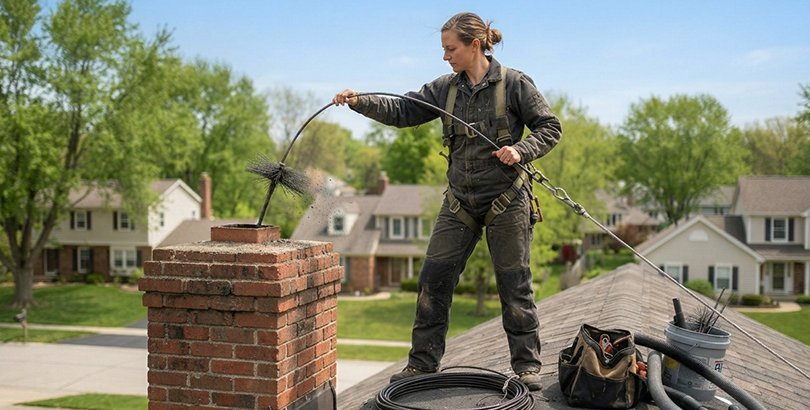
Step 2: The right removal method. Loose and crusty deposits are usually removed with brushes and sweeping tools sized to the flue. Heavier or glazed deposits may need specialized tools or chemical treatments that change the creosote so it can be brushed away. Glazed creosote can take more than one visit.
Step 3: Check for damage. After cleaning we can see the flue better and note any cracks, gaps or signs of a past chimney fire.
Book a chimney cleaning or inspection. Inspections start at $69 and basic chimney cleaning starts at $199, with 10% off for seniors and veterans. Book online or call (860) 854-1894.
Learn more about our chimney cleaning and chimney inspection services.
Do cleaning logs and home remedies replace a professional?
Creosote-removal logs and powders are sold to help loosen buildup. Some may help as part of regular maintenance, but they do not replace a professional inspection and cleaning.
The Chimney Safety Institute of America (CSIA) notes that these products are not a substitute for a professional sweep. They cannot tell you how much buildup is in your chimney, whether it is glazed, or whether the chimney is damaged. Loosened creosote can also fall and collect at the bottom of the chimney or on the smoke shelf, where it still has to be removed.
How to reduce conditions that encourage buildup
You cannot stop creosote forming, but you can slow it:
- Burn seasoned wood. Split and dried, usually six months or longer. It burns hotter and cleaner.
- Avoid smoldering fires. Give the fire enough air. Follow your fireplace or stove instructions.
- Fix draft problems. If your fireplace smokes or struggles to draw, have it checked.
- Burn the right fuel. Never burn trash, cardboard, or treated or painted wood.
- Schedule regular inspections. A professional can tell you how often your chimney needs cleaning for the way you use it.
Frequently asked questions
Can a homeowner identify glazed creosote?
Sometimes it shows as a shiny, tar-like coating. But you cannot reliably see the whole flue from the firebox. A professional inspection is the best way to know. Book one.
Can buildup occur in a recently cleaned chimney?
Yes. It starts forming again as soon as you burn wood. Wet wood or smoldering fires can create significant buildup in a single season. Ask us how often you need cleaning.
Does burning a hotter fire safely remove it?
No. Burning a very hot fire to burn off creosote is dangerous. It can ignite the buildup and cause a chimney fire. Removal should be done by a professional. Book a cleaning.
Does every fuel type produce the same deposits?
No. Wood produces creosote. Gas and oil appliances produce different byproducts that can still cause problems in the venting system. Each fuel type needs its own kind of inspection and maintenance. Tell us what you burn.